
Logo that reads 'Technique Corrective Exercise Specialist' with 'Technique' in red and grey, 'Corrective Exercise' in grey, and 'Specialist' in red cursive.
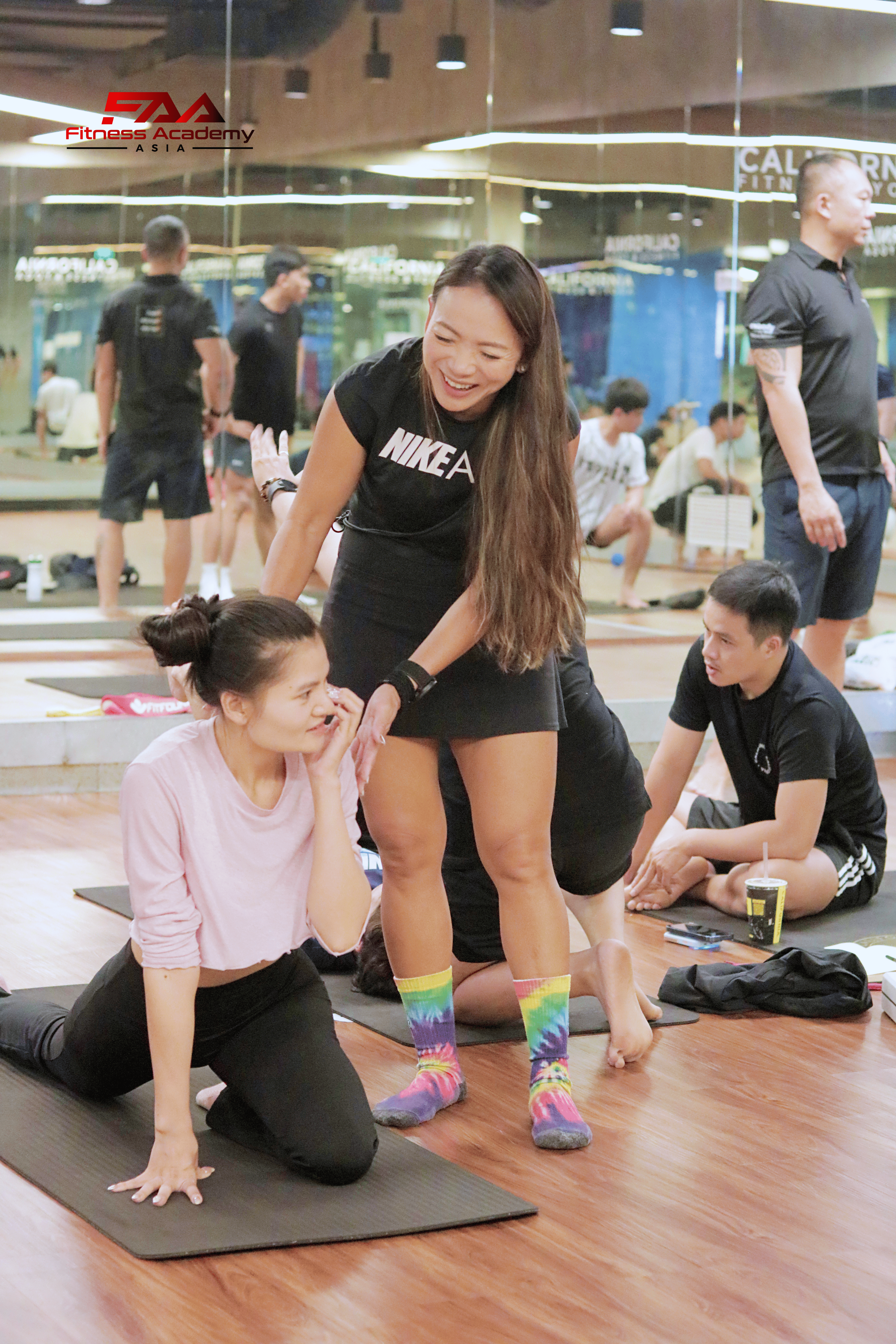
A woman in a black Nike t-shirt is helping a girl with a stretch or yoga pose in a fitness studio. The girl is sitting on her heels, with her hand on her face, wearing rainbow-colored socks. Other people are exercising in the background, with a mirrored wall and fitness equipment visible.

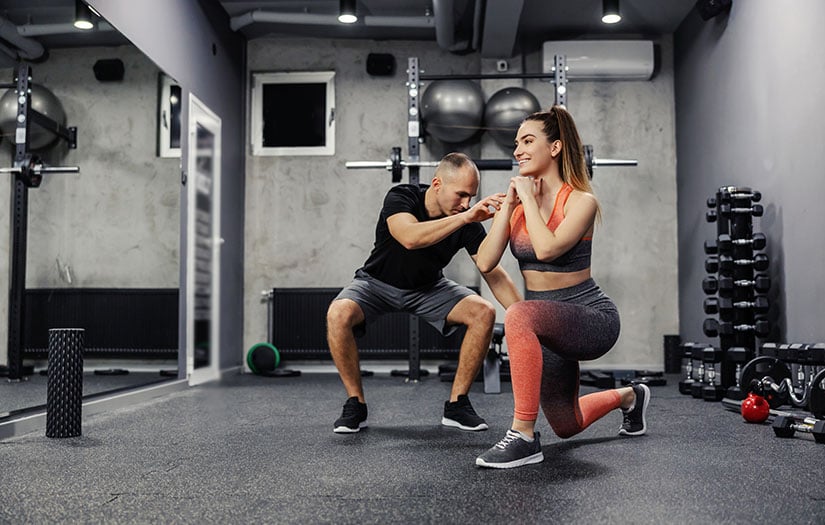
Understanding your client and how their posture effects their stability, mobility, movement and strength. This skillset is now a basic necessity for personal trainers who wishes to thrive in the fitness industry.

With a solid foundation in corrective exercise, you gain the precise tools to instantly connect visible movement flaws directly to underlying postural misalignments. Instead of guessing, you will pinpoint the exact muscle imbalances causing your client's limitations and clearly articulate how their posture impacts their overall strength and mobility. Mastering this level of diagnostic coaching builds instant authority, drives unmatched client results, and transforms your training business.

Why Is Corrective Exercise the Future of Coaching?

More urban professionals than ever suffer from chronic postural deviations and musculoskeletal dysfunctions. Consequently, the industry demand for trainers proficient in corrective exercise is skyrocketing.

Prevalence of Common Postural Deviations in Adults

Relative distribution among urban desk-bound populations presenting postural issues

PAIN POINT SURVEY 80%+ Suffer from Postural Issues
Forward Head Posture 22.48%
Rounded Shoulders / Upper Crossed Syndrome 19.88%
Anterior / Posterior Pelvic Tilt 17.88%
Uneven Shoulders / Scapular Dyskinesis 15.58%
Lower Back Tightness / Pelvic Instability 14.69%
Functional Scoliosis / Thoracic Rotation 9.49%

What Will You Gain After Mastering Corrective Exercise?

Traditional personal trainers only instruct "how to execute a movement". Corrective exercise specialists uncover and resolve "why clients struggle to perform it, and why it causes pain."

Move beyond healthy clients looking only for hypertrophy or fat loss. You will confidently onboard post-rehab individuals, postpartum mothers, and clients struggling with chronic neck, shoulder, or lower back pain, scoliosis, and kinetic chain imbalances. A wider demographic translates directly into consistent, high-value retention and stable revenue streams.

Standard personal trainers are abundant, but coaches specialized in clinical movement screening, static & dynamic postural assessments, and targeted biomechanical corrections are exceptionally rare. Clients willingly invest premium rates in pain-free movement and long-term joint health over generic workouts—enabling you to boost your session fees by 30% to 50%.

Master rigorous movement assessments and red-flag triage protocols before loading clients with weight. Eliminate guesswork, prevent compensation injuries, safeguard client longevity, and drastically reduce training liabilities and dispute risks.

Even for clients seeking pure body composition transformations, realigning pelvic and scapular positioning unlocks balanced muscle recruitment and prevents muscular asymmetries. When clients clearly see and feel lasting transformation without chronic soreness or setbacks, your referral and re-enrollment rates increase exponentially.

TRUE MOVEMENT SPECIALISTS don’t avoid POSTURE MISALIGNMENTS and MUSCLE IMBALANCES

— they solve it at ITS ROOTS

Experienced Personal Trainers DON’T AVOID POSTURE MISALIGNMENTS AND MUSCLE IMBALANCES

— THEY SOLVE IT AT ITS ROOTS

course details

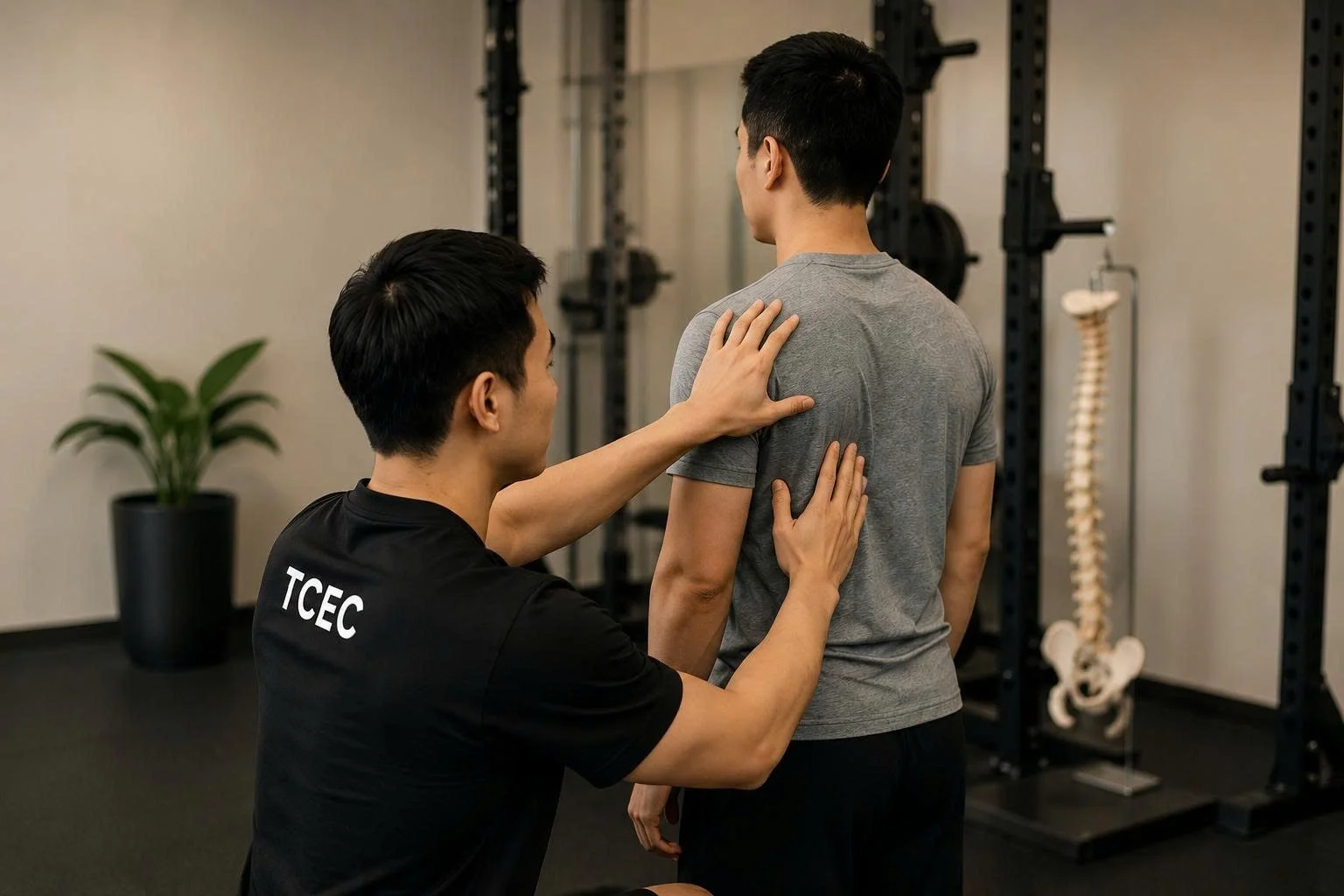
A physical therapist or trainer assesses a man's shoulder and back mobility during an exercise or physical therapy session in a gym. The therapist is wearing a black T-shirt with the logo 'TCEC' and is positioning his hands on the man's shoulder and chest for evaluation.

COURSE SECTIONS

* Advance Your Career Today

* Advance Your Career Today

Call for a personalized career consultation.

Talk to our education advisors


course highlights

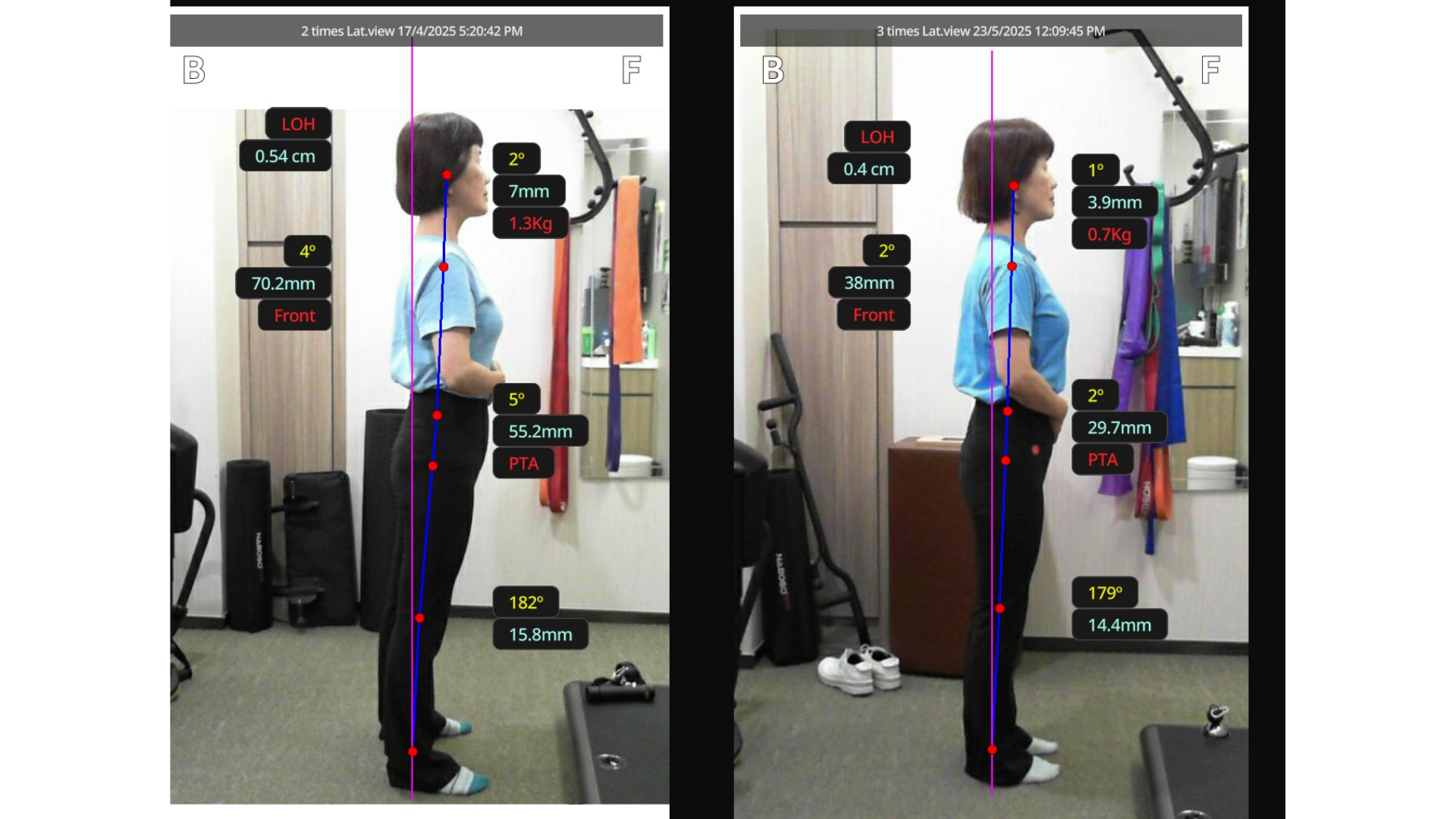
Use exbody for Posture Assessment

Master the exbody postural assessment technology to analyze your clients' posture and identify specific deviations and imbalances which impacting their health.


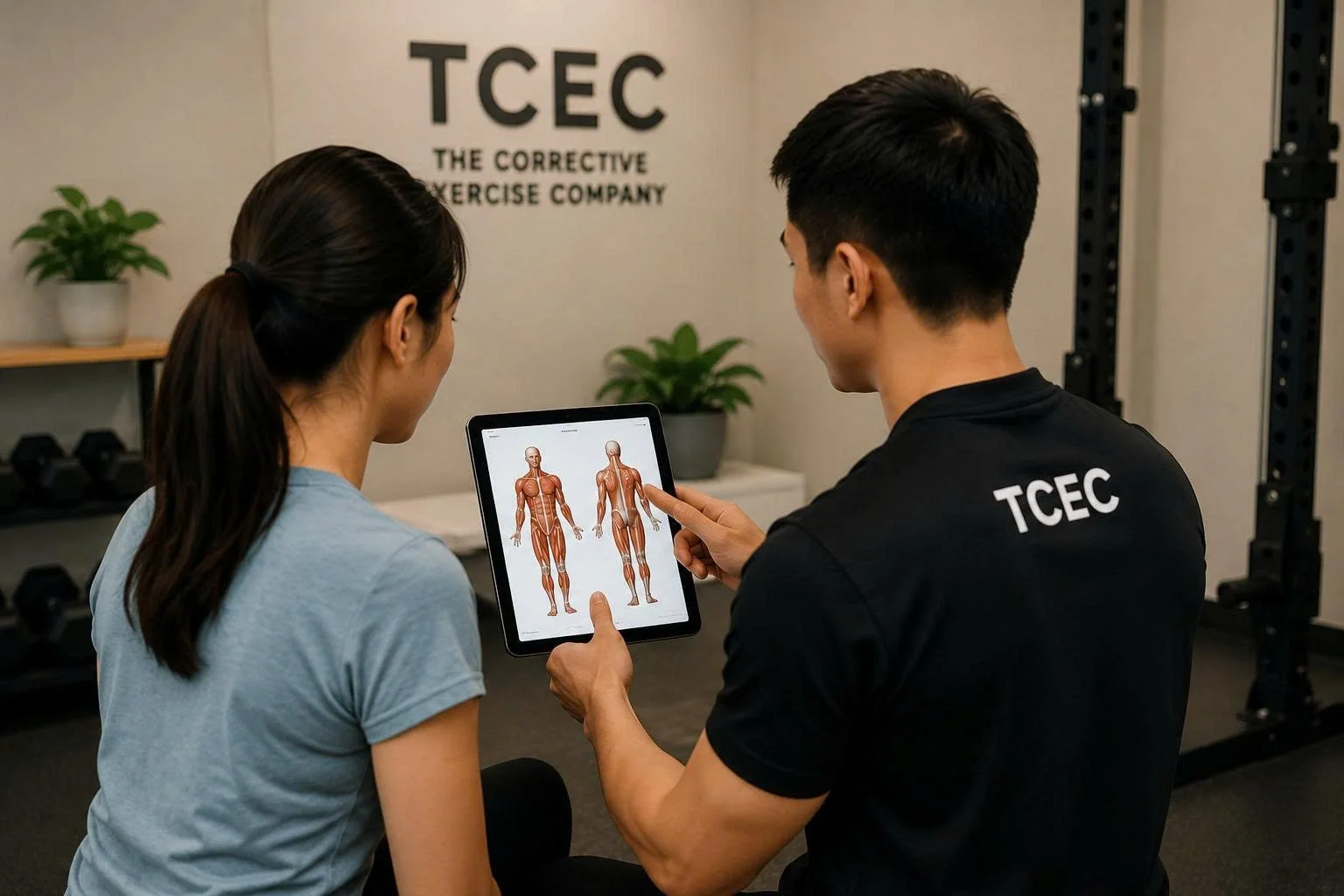
A fitness trainer and a woman look at an anatomical diagram of the muscles on a tablet in a gym. The trainer wears a black shirt with 'TCEC' on the back, and the woman wears a light blue shirt. There are plants and gym equipment in the background.
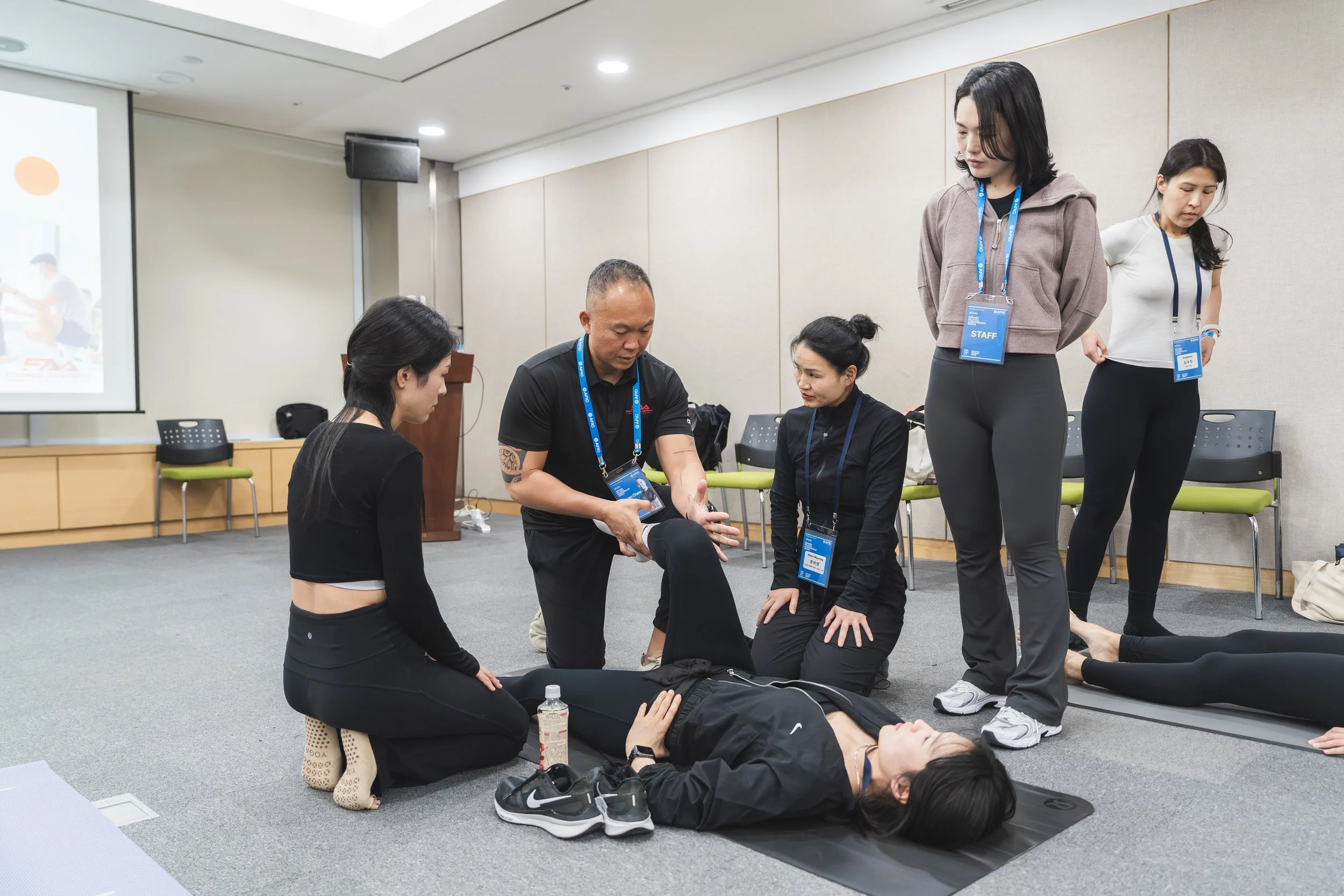
A group of five women engaged in a CPR training session. One woman is lying on the ground while another performs chest compressions. Two others are kneeling and observing, and a fifth woman is standing and watching the activity.

Step-by-Step Approach to Postural Problems

Discover a structured methodology for addressing postural issues. This approach will guide you through initial assessments, identification of root causes, and the development of tailored intervention plans to effectively correct postural imbalances.


Practical Hands-On Solutions

Engage in interactive sessions that focus on real-world applications. You’ll receive practical techniques and exercises that can be immediately implemented in your work with clients, enhancing their posture and overall well-being.

4-Card Horizontal Continuous Carousel

COURSE OBJECTIVES

What did the coach and the student say?

Register Here!

Register Here!